Technology has incredibly changed the way we diagnose and treat dental problems in the world of dentistry. One of the most significant technological advances made in dentistry is the advent of digital X-rays. If you are seeing a dentist in Burns Lake or looking for a dentist in your area, understanding how digital X-rays work and the importance of digital X-rays may make you feel more comfortable when visiting the dentist.
What Are Dental Digital X-Rays?
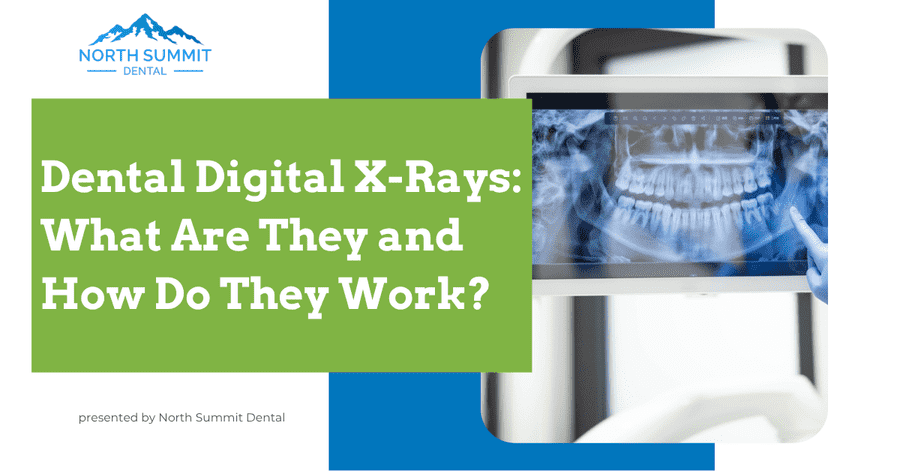
Dental digital X-rays refer to advanced X-rays that use digital sensors instead of traditional dental X-ray film. An x-ray is taken to get a detailed image of errant areas of the mouth, which cannot be seen by the naked eye. The dentist can view X-ray images on a computer screen just a few seconds after taking them. This allows your dentist to look for cavities, infections, bone loss, and more.
Unlike traditional X-rays, digital radiography uses up to 90% less radiation while being safe for all subjects, including adults and children. Also, the dentist can keep these images in their system and compare them over a period of time to see how your oral health has changed.
How Do Dental Digital X-Rays Work?
Getting a digital X-ray is an easy, fast, and comfy process. To take the images, a small electronic sensor is inserted into your mouth by your dentist. As soon as the machine is turned on, the sensor immediately sends digital data to the computer, showing the image
The dentist can zoom into the picture, enhance it or modify it for better visibility of your teeth and surroundings. This high-tech imaging helps doctors pick the right treatment for their patients.
Types of Dental Digital X-Rays
Your dental x-rays in Burns Lake will vary depending on your oral health situation.
- Bitewing X-rays show the upper and lower teeth in one area to see if there is decay and to monitor bone levels.
- A periapical x-ray focuses on one or two teeth, showing the root and bone around it.
- Panoramic X-rays are X-rays taken outside the mouth. They give a complete picture of your jaw, teeth, and sinuses. They are useful for assessing wisdom teeth and braces.
- Occlusal X-rays take images of the roof or floor of your mouth in order to check for the proper alignment of teeth and jaws.
Benefits of Digital Dental X-Rays.
Digital X-rays have several benefits over the traditional procedures.
- Less exposure to radiation, safe for all age groups.
- You will get immediate results; there is no film to wait for.
- With the use of digital tools, a dentist can spot little problems with precision.
- Biodegradable: There is no chemical micro-processing or plastic film waste.
- You can effortlessly track changes and share your records with any specialist should the need arise.
When Are Dental X-Rays Needed?
Dentist near you might advise X-rays for routine checkups or prior to specific procedures. They might even be able to help your dentist monitor cavities. Children can use digital x-rays to monitor teeth in relation to development and alignment.
Conclusion
Early detection and accurate treatment of conditions rely on digital X-rays as a necessity for all forms of preventive and diagnostic dentistry. If you are looking for safe, modern, and comfortable dental X-rays in Burns Lake, North Summit Dental is your place to go.
Our practitioners take advantage of the latest digital images to provide an accurate diagnosis and tailored care. Contact us now!